
This is a GREAT article and in it they even cite my hometown airport of Grand Rapids, MI at the end as a perfect example. This really gives you some insight on the price of oil and cost of running an airline. De-regulation at the end of the 1980's saw some routes to tin towns federally subsidized, now even those EAS (Essential Air Service) routes may be cut due to fuel prices. I for one can't fault the airlines one bit, even though it is sad for these communities.
Joe Sharkey
-New York Times
"24 Towns may lose air service - Delta Air Lines says it's losing $14 million a year serving the small airports.
Rural America, already struggling to recover from the recession and the flight of its young people, is about to take another blow: the loss of its airline service.
That was underscored last week when Delta Air Lines announced that it “can no longer afford” to continue service at 24 small airports. The carrier says it is losing a total of $14 million a year on flights from places like Thief River Falls, a city of 8,600 in northwest Minnesota that fills only 12 percent of the seats, or Pierre, the capital of South Dakota, where Delta’s two daily flights are on average less than half full.
Nationally, all major airlines have been reducing and sometimes eliminating flights altogether in small cities, as the industry concentrates much of its service in 29 major hubs, which now account for 70 percent of all passenger traffic, according to the Federal Aviation Administration.
Delta’s announcement was especially acute because the airline operates in most of the small airports that receive a total of almost $200 million in federal subsidies to maintain air service under the Essential Air Service program. The subsidies are scheduled to expire in 2013 unless revived by Congress. Delta acquired many of those small-city markets in the Midwest when it merged with Northwest Airlines.
Airlines say that simple economics are driving them out of small-town America. With fuel prices high, carriers have been reducing domestic routes and seating capacity to focus on the flights that bring in the most revenue per plane — typically those in larger cities, especially major hubs. At the same time, airlines are removing less fuel-efficient aircraft from their fleets, including the 50-seat regional jets that have been the backbone of air service in small- and midsize markets.
“We just don’t have airplanes that can serve small communities economically anymore,” said Michael Boyd, the president of the air-service consulting firm Boyd Group International. “And unless somebody wants to pay a whole lot of money to carry a few people out of the airport at Thief River Falls, it just ain’t going to happen anymore for a lot of those places.”
One of those places, it appears, is Muscle Shoals, a town of about 13,000 along the Tennessee River in northwest Alabama. About $1.7 million a year in federal subsidies maintains two Delta flights a day from Northwest Alabama Regional Airport in Muscle Shoals, one of the 24 airports Delta wants to stop serving unless it can receive larger subsidies. Those flights are operated under the Delta name on Saab A340 turboprops flown by Mesaba Airlines, a Delta subcontractor.
Barry Auchly, of the Shoals Chamber of Commerce, said that the airport has enough market vitality to justify keeping commercial service. However, he said, passengers have fallen off since Delta decided this summer to redirect its two daily departures to Memphis, rather than to Delta’s global hub in Atlanta where the flights went last year.
Delta says its flights from the airport are an average of 35.7 percent full, which compares with the national average on Delta’s domestic flights of 81.9 percent in June.
“Last year, the first year with the Atlanta service, we exceeded 8,500 passengers and were well on our way to 10,000,” said Mr. Auchly. That growth proved, he said, that the local airport could eventually operate without federal air-service subsidies. He said Delta told him the destinations were switched because Memphis, though far less in demand, had more efficient turboprop service facilities than Atlanta.
“We want to be a self-sustaining airport,” Mr. Auchly said. “We think we have the demand; we just need to be able to depend on consistent service.”
Delta would like to continue flying from some of the 24 airports it designated last Friday as “underperforming” — but only if the federal subsidies were increased to cover the additional costs of serving them with regional jets. Meanwhile, Delta said it plans to abandon other airports where load factors were deemed too low, and assist those airports in finding replacement carriers.
Replacing a 34-seat turboprop plane with a 50-seat regional jet would seem to be counterintuitive in markets where the problem is too few passengers. Kristin Baur, a Delta spokeswoman, acknowledged that 50-seat regional jets, besides having 16 more seats, also are less fuel-efficient.
However, she said, regional jets are more popular with passengers, and can increase overall bookings in some markets where people will drive to more distant airports rather than fly a turboprop from the local airport.
Officials at some of the 24 small airports slated to lose Delta service said the airline has not flatly told them when it is stopping the flights, though at subsidized airports Delta said it would withdraw when the current contracts expired.
In some markets, depending on load factors, Delta would like to either receive new Essential Air Service contracts or get more money for the ones it currently has. Slightly more than a third of the airports Delta identified on its list would be in that group, it said.
Pierre, a scrappy city of 14,000 that sits smack in the rural center of South Dakota, got the news that it might lose Delta service just as weary residents were hauling away the last soggy sandbags as they recovered from major flooding of the Missouri River in May.
After years of receiving federal air-service subsidies, the airport now has four unsubsidized departures a day — two by the Delta subcontractor Mesaba and two by the regional carrier Great Lakes Airlines.
The city was recently so optimistic about its prospects that it began construction on a $12 million passenger terminal at Pierre Regional Airport.
“We’re rural America,” said Laurie Gill, the mayor. “It’s hard for me to understand a business decision to eliminate commercial air service based on the growth that we’ve seen here.”
Delta flew 4,840 of the total 6,833 passengers who boarded flights at Pierre this year through June, and Delta’s planes left with 47.4 percent of the seats filled on average. If Delta leaves and no other airline comes in, most travelers from the South Dakota capital would have to drive to the closest bigger airport in Rapid City, 140 miles away. Time-constrained corporate and government travelers dislike that idea, Ms. Gill said.
Welcome to the tough new world of commercial air travel, said Mr. Boyd, who thinks the Essential Air Service program serves a vital need for those communities that are far from an alternate airport with better service.
“It’s not like people are going to get cut off from the world. You may be able to have your local air service, but maybe it’s an hour’s drive away,” he said.
For example, Muskegon, in western Michigan, has a few daily flights operated by United Airlines, subsidized with $600,000 a year from the Essential Air Service program. Meanwhile, the Gerald R. Ford International Airport in Grand Rapids, 40 miles away, had two million passengers last year, and is served by eight airlines.
The savings from the short drive can be substantial. On Monday, for example, the lowest round-trip fare on a United flight to Kennedy Airport in New York from Muskegon, connecting through Chicago, was listed at $1,149. Drive to Grand Rapids, though, and you could find a flight to Kennedy for as little as $600 on various airlines.
'Muskegon has great air service,” Mr. Boyd said. “It’s called Grand Rapids." "
Link:
http://www.msnbc.msn.com/id/43814049/ns/travel-business_travel/
Wednesday, July 20, 2011

Monday, July 18, 2011
The District: Preview
Hey Folks, Last night I returned from a 5-day trip to the nation's capital. Here's a quick teaser of a photo journey and commentary to come:


Thursday, July 7, 2011
Why Do People Hate Airlines So Much?

From the guy on the ramp loading bags onto the plane, reservations agents, ticket and gate agents and flight attendants, it's a thankless job working for an airline. That's the immediate impression I get from this new survey done by The Atlantic.
Four US airlines were listed as the most hated companies in our country, Delta, US Airways, United and American. One might think of appalling safety records or some ghastly goings-on in their procedures was what the public saw as being so terrible to "hate" them. Delta Airlines, recently listed by Fortune Magezine to be the most admired US airline, was placed at number two, yes #2, on the list because of extra baggage charges and people having to pay for food and alcoholic beverages. Yup, the exact things that every other airline in this country does.
That listing really blows my mind, but at the same time it doesn't surprise me at all. Flying has become one of the less glamorous experiences out there. It's a lot like taking a Greyhound bus, but with more TSA frisking in the process. The customer comes into contact with a lot of unpleasant variables long before he or she even steps foot onto the airplane. There is also a slight twist in my comparison to bus travel.
You see while flying has become a lot like bus travel, so has it's ticket price. Right now on Delta I can fly round-trip from the Great Lakes State to Los Angeles for $309 total. Do you know what jet fuel prices are right now? I'll give you a hint, they ain't makin' a profit off my sorry ass flying me near-transcon for $309. So if you think you're gonna get a three-course meal on china and alcohol included in that you're nuts. The airlines simply can't afford to do it, so they need to find other ways to compensate for the fact that the average vacation traveler in the US nowadays wants a $200 fare to Vegas for the weekend. They need to make a profit to, well, survive and pay their employees!!
On the topic of poor customer service, well, you get what you pay for. Why do you think the front-cabin is so sought after by frequent flyers, genius. As I said, people need to understand that when they want rock-bottom fares and then show up at the airport in a tanktop, cut-offs and lacking sufficient amounts of deoderant, you're simply creating your own situation. The public's expectations are not in line with what they demand. If you want it to be like 1975, go look up the price of a round-trip trans-con fare on Pan Am or TWA in that era. Betcha it's completely off the charts in comparison, inflation included.
What's ironic about all this? The four airlines listed are the four remaining "legacy" carriers in the United States. That being that not a single LCC (low-cost-carrier i.e. Southwest, AirTran, JetBlue) was included. Could it simply be all in the customer's head? The stats are interesting.
http://www.theatlantic.com/business/archive/2011/07/the-19-most-hated-companies-in-america/241344/#slide18
Your reaction?
Wednesday, July 6, 2011
The Verdict
Yesterday afternoon is seemed that every person between the ages of 18 and 75 and stay-at-home mom's everywhere were glued to their television sets. Emotions ran high, female television hosts were crying live on the air, and everyone had an opinion. If one didn't know better this could have been a landmark civil or human rights act. One might have thought we had found the definitive cure for cancer. Maybe OJ had gotten re-aquainted with his old white Bronco. It all turned out to be none of the above actually. Instead of worrying about our children's education in such a manner, real and meaningful employment, the national debt or other real issue we bind ourselves together in a court case involving people no one had ever heard of even a month ago. Some young mother had been accused of killing her small child and covering it up. Despite what mass public opinion was the jury found this young lady, Casey Anthony, not-guilty of murder in a Florida courtroom. In that same amount of time more than 1,000 children in Africa died due to hunger and disease caused by war and poverty.
If you can't tell from my opening statement, I hadn't followed more than 5 seconds of this trial until the moment yesterday afternoon (apparently when the verdict was read) that my Facebook news-feed absolutely exploded with hatred, outrage and disgust. "What the hell just happened?" Happened to be my immediate response. The only way I realized what on earth anyone was going on about was by going to my local TV news homepage and recognizing a picture of the acquitted.
"Have you been living under a rock?!?" One may very well ask me. That all depends on your perspective. I don't like drama, daytime TV nor courtroom television. I don't like watching JerseyShore/Kardashian-style "reality" TV. I'm more of an ESPN/Travel Channel/History Channel/Discovery Channel kind of guy. If it's what you like, it's what you like. Not that only people who love JerseyShore like watching stuff like that trial.
So with all that said, I will give you my one take on the topic. Was justice served? Maybe and maybe not. As you know by now I didn't watch a moment of the coverage nor read more than a single sentence about it, before or after the verdict. The best explanation I can give for why she was acquitted was, of all things, geographical. Follow me on this. Florida is a death-penalty state, and they certainly take pride in executing (ahem -pun- ahem) their policies. As we know, innocent people have been sentenced to death and their execution carried out. In a case such as this that jury likely had that in mind. A Florida jury will be much more methodical and apprehensive to convict someone of first degree murder than would a Michigan jury, based solely on the weight of the implications of their verdict. In Michigan, I am confident she would have been found guilty because we are not a capital punishment state. If that jury had even an ounce of doubt, or if something in the prosecution's case wasn't 110% air-tight, that jury will hesitate and double-clutch the "death" decision (if they are being responsible with the power vested in them by the court-system). A little girl is dead, whether by cold-blooded murder or neglegance you and I will probably never know. If Casey Anthony is indeed guilty she will be judged in the end by her creator, that we can be sure of. That is my only explanation for why the verdict was decided in such a way.
Many folks are sickened by the outcome yesterday and emotions obviously were high, even on the internet. Like much of our attention to this instance, this case will soon fade into the annals of the history of our popular culture. We so smother and exhaust ourselves with these real-life soap-operas that we blind ourselves to the greater issues in our world which sadly have always been and continue to exist. If we however took the same emotion and outrage made visible for something like this and transferred it to say, global human rights, energy and efficiency, truth in government and economical security we could really accomplish some things beyond the water-cooler.
Good luck.
If you can't tell from my opening statement, I hadn't followed more than 5 seconds of this trial until the moment yesterday afternoon (apparently when the verdict was read) that my Facebook news-feed absolutely exploded with hatred, outrage and disgust. "What the hell just happened?" Happened to be my immediate response. The only way I realized what on earth anyone was going on about was by going to my local TV news homepage and recognizing a picture of the acquitted.
"Have you been living under a rock?!?" One may very well ask me. That all depends on your perspective. I don't like drama, daytime TV nor courtroom television. I don't like watching JerseyShore/Kardashian-style "reality" TV. I'm more of an ESPN/Travel Channel/History Channel/Discovery Channel kind of guy. If it's what you like, it's what you like. Not that only people who love JerseyShore like watching stuff like that trial.
So with all that said, I will give you my one take on the topic. Was justice served? Maybe and maybe not. As you know by now I didn't watch a moment of the coverage nor read more than a single sentence about it, before or after the verdict. The best explanation I can give for why she was acquitted was, of all things, geographical. Follow me on this. Florida is a death-penalty state, and they certainly take pride in executing (ahem -pun- ahem) their policies. As we know, innocent people have been sentenced to death and their execution carried out. In a case such as this that jury likely had that in mind. A Florida jury will be much more methodical and apprehensive to convict someone of first degree murder than would a Michigan jury, based solely on the weight of the implications of their verdict. In Michigan, I am confident she would have been found guilty because we are not a capital punishment state. If that jury had even an ounce of doubt, or if something in the prosecution's case wasn't 110% air-tight, that jury will hesitate and double-clutch the "death" decision (if they are being responsible with the power vested in them by the court-system). A little girl is dead, whether by cold-blooded murder or neglegance you and I will probably never know. If Casey Anthony is indeed guilty she will be judged in the end by her creator, that we can be sure of. That is my only explanation for why the verdict was decided in such a way.
Many folks are sickened by the outcome yesterday and emotions obviously were high, even on the internet. Like much of our attention to this instance, this case will soon fade into the annals of the history of our popular culture. We so smother and exhaust ourselves with these real-life soap-operas that we blind ourselves to the greater issues in our world which sadly have always been and continue to exist. If we however took the same emotion and outrage made visible for something like this and transferred it to say, global human rights, energy and efficiency, truth in government and economical security we could really accomplish some things beyond the water-cooler.
Good luck.
Wednesday, June 22, 2011
Storms
Yesterday evening the Grand Rapids area was hammered with severe storms just after rush hour. 2-4 Inches of rain were widespread in just an hours time, along with some heavy winds and minor damages. Today see's some new storm and rain development, although the risk for severe development is on the East side of the mitten today.
Photos below taken at noon in Grand Rapids.

Photos below taken at noon in Grand Rapids.


Tuesday, June 21, 2011
Photo Of The Day: Summer
This being the first official day of the summer and longest day of the year, I wanted to post something that would put us all in the summer mood. Warm air, a fresh Lake Michigan breeze, and cystal blue tropical waters.

Note this is not my photo**
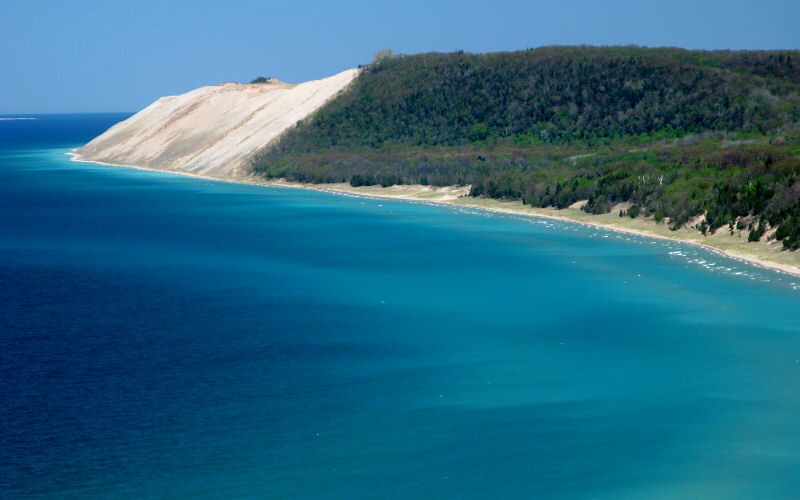
Note this is not my photo**
Monday, June 20, 2011
B-93 Birthday Bash #19 - June 18, 2011 -Our Official Review-
For the past two decades here in West Michigan the premiere country music radio station has held a large (which has grown into huge) outdoor country music festival. The event began as a one day show, and then several years back morphed into a two day event. This year's was #19, and the second year in a row it was to be held at the 131 MotorSports Park in Martin, MI. Attendance for the day we went was over 60,000!

^All credit for this pano to B-93^
I can give you a run-down of the event. We ended up going on day one, Saturday June 18th. The lineup for that day went as follows:
-Brian Lorente and Usual Suspects (local band)
-LoCash Cowboys
-Corey Smith
-Jane Dear Girls
-Ty Stone
-Aaron Lewis (from rock band Staind)
-Frankie Ballard
-Thompson Square
-Eric Church
The schedule for the day was evenly laid out. They were going to begin letting cars into the parking lot at 8am, open the venue gates for people to go claim their seats at 10am, and music was to start at noon. This is the second year they were at this venue, and my review stands as an independent run-down of how things operated. Also, I had not been to 131 MotorSports Park for any event previously, so this is a clean-slate observation.
The girlfriend and I decided to leave for Martin about 7am, and we quickly arrived about twenty minutes later at our exit South of Grand Rapids. Immediatly when we got off the highway we realized there was already a back-up of cars lining up to get in. So, we waited in that line with them, the line already being a mile-long from the gates at 7:30. There is only one-way in and out of the facility, down a small, two-lane country road. We were promptly let in 25 minutes later, at a cost of $20 per vehicle. Parking was simple and hastle free. It being about 8am, we had a good two hours to wait in line for the gates to open. A friend had saved a spot for us near the front, so we calmly strolled over to our saved piece of realestate for the next 120 minutes. As we waited, the crowds grew bigger and continued to push forward cramming everyone together. Then it began to get rather warm in line, even before 10am. With the crowds growing and getting very pushy, it would not have hurt the staff organizers to open the gates 20-30 minutes early to allow the congestion to ease. However, they waited until exactly 10am to open the "bottle cap", and the sprint for the best lawn space was on.
When it comes to concessions, you aren't allowed to bring any food or drink of your own in. You may however bring your own empty water bottle(s) as they have the National Guard bring in water trucks for people to help themselves to for free. Food and alcohol are a done on a "ticket" system, where you line up to buy tickets and then use those tickets to purchase food/drinks. Prices are moderate, but not economical either. They had half the hard-stand restrooms at the facility open to the public inside the gates. However they made all of those restrooms female only facilities. Very gentlemanly of them. We males had to use the porta-johns.
We enjoyed the music, ate a little food, and got lots of sun. With virtually no breeze, and temps near 90, we began to bake. Thank goodness for sunblock!
Here's where my rating system comes into play. It's a simple pass/okay/fail of bulletpoints.
*Price - PASS. Tickets are free, so for the number of bands you see, $20 parking is not unreasonable.
*Location/Venue - PASS. 131 MotorSports Park has a huge plot of land, and it's the largest plot of land the event has ever been held on. Inside the complex there is lots of room to roam, and there are concrete pathways as you can see in the photo above that allow for easier movement than had been experienced at the event's previous two locations (Ionia Fair Grounds and Allegan Fair Ground).
*Parking - FAIL. Despite there being lots and lots of parking immediatly off US-131, there is just that one entrance/exit. The bottleneck is so severe that my girlfriend and I left early at the end of the night (missing the last act, Eric Church) to avoid the crowds. We're happy we did, as friends of ours who left shortly after 8pm were still stuck in the parking lot at 10:30 that night, two hours after they got to their cars. Not only that, but the small entrance forced cars to be backed up all down US-131 for a long time on Saturday, creating a logistics nightmare for traffic.
*Concessions - OKAY. Prices aren't too bad, and are a lot better than a concert at Van Andel Arena or a Tigers game. However the ticket system is a complete failure. It creates a logistical nightmare with a crowd that size and people begin to get impatient. If you are going to have a "ticket" system at concessions, you need to also have more ticket counters for people to purchase them than were available that day. Apparently they did a nice ammendment to the system, on Sunday they were allowing people to buy tickets when they got in line before the gates opened, thus hopefully easing the stress.
*Water - OKAY. The "water buffalos" from the National Guard are a wonderful touch. However there are only TWO of them for a crowd of 60,000 during a 10 hour span of time. That creates long lines. There is no reason with all the room they have they could not have at least four or five more tanks in circulation.
*Restrooms - OKAY. Lines for restrooms weren't that obscene, even for the women. They could have used a couple dozen more porta-johns however, they have the space.
*Music/Lineup - PASS. Yes, there have been better lineups for acts at Birthday Bash, but I was satisfied overall with the set we had. Besides, the talent on stage is totally up to personal taste.
Overall I would give the event a solid letter-grade of B. In other words I definitly plan to attend again in the future!

^All credit for this pano to B-93^
I can give you a run-down of the event. We ended up going on day one, Saturday June 18th. The lineup for that day went as follows:
-Brian Lorente and Usual Suspects (local band)
-LoCash Cowboys
-Corey Smith
-Jane Dear Girls
-Ty Stone
-Aaron Lewis (from rock band Staind)
-Frankie Ballard
-Thompson Square
-Eric Church
The schedule for the day was evenly laid out. They were going to begin letting cars into the parking lot at 8am, open the venue gates for people to go claim their seats at 10am, and music was to start at noon. This is the second year they were at this venue, and my review stands as an independent run-down of how things operated. Also, I had not been to 131 MotorSports Park for any event previously, so this is a clean-slate observation.
The girlfriend and I decided to leave for Martin about 7am, and we quickly arrived about twenty minutes later at our exit South of Grand Rapids. Immediatly when we got off the highway we realized there was already a back-up of cars lining up to get in. So, we waited in that line with them, the line already being a mile-long from the gates at 7:30. There is only one-way in and out of the facility, down a small, two-lane country road. We were promptly let in 25 minutes later, at a cost of $20 per vehicle. Parking was simple and hastle free. It being about 8am, we had a good two hours to wait in line for the gates to open. A friend had saved a spot for us near the front, so we calmly strolled over to our saved piece of realestate for the next 120 minutes. As we waited, the crowds grew bigger and continued to push forward cramming everyone together. Then it began to get rather warm in line, even before 10am. With the crowds growing and getting very pushy, it would not have hurt the staff organizers to open the gates 20-30 minutes early to allow the congestion to ease. However, they waited until exactly 10am to open the "bottle cap", and the sprint for the best lawn space was on.
When it comes to concessions, you aren't allowed to bring any food or drink of your own in. You may however bring your own empty water bottle(s) as they have the National Guard bring in water trucks for people to help themselves to for free. Food and alcohol are a done on a "ticket" system, where you line up to buy tickets and then use those tickets to purchase food/drinks. Prices are moderate, but not economical either. They had half the hard-stand restrooms at the facility open to the public inside the gates. However they made all of those restrooms female only facilities. Very gentlemanly of them. We males had to use the porta-johns.
We enjoyed the music, ate a little food, and got lots of sun. With virtually no breeze, and temps near 90, we began to bake. Thank goodness for sunblock!
Here's where my rating system comes into play. It's a simple pass/okay/fail of bulletpoints.
*Price - PASS. Tickets are free, so for the number of bands you see, $20 parking is not unreasonable.
*Location/Venue - PASS. 131 MotorSports Park has a huge plot of land, and it's the largest plot of land the event has ever been held on. Inside the complex there is lots of room to roam, and there are concrete pathways as you can see in the photo above that allow for easier movement than had been experienced at the event's previous two locations (Ionia Fair Grounds and Allegan Fair Ground).
*Parking - FAIL. Despite there being lots and lots of parking immediatly off US-131, there is just that one entrance/exit. The bottleneck is so severe that my girlfriend and I left early at the end of the night (missing the last act, Eric Church) to avoid the crowds. We're happy we did, as friends of ours who left shortly after 8pm were still stuck in the parking lot at 10:30 that night, two hours after they got to their cars. Not only that, but the small entrance forced cars to be backed up all down US-131 for a long time on Saturday, creating a logistics nightmare for traffic.
*Concessions - OKAY. Prices aren't too bad, and are a lot better than a concert at Van Andel Arena or a Tigers game. However the ticket system is a complete failure. It creates a logistical nightmare with a crowd that size and people begin to get impatient. If you are going to have a "ticket" system at concessions, you need to also have more ticket counters for people to purchase them than were available that day. Apparently they did a nice ammendment to the system, on Sunday they were allowing people to buy tickets when they got in line before the gates opened, thus hopefully easing the stress.
*Water - OKAY. The "water buffalos" from the National Guard are a wonderful touch. However there are only TWO of them for a crowd of 60,000 during a 10 hour span of time. That creates long lines. There is no reason with all the room they have they could not have at least four or five more tanks in circulation.
*Restrooms - OKAY. Lines for restrooms weren't that obscene, even for the women. They could have used a couple dozen more porta-johns however, they have the space.
*Music/Lineup - PASS. Yes, there have been better lineups for acts at Birthday Bash, but I was satisfied overall with the set we had. Besides, the talent on stage is totally up to personal taste.
Overall I would give the event a solid letter-grade of B. In other words I definitly plan to attend again in the future!
Subscribe to:
Posts (Atom)
